
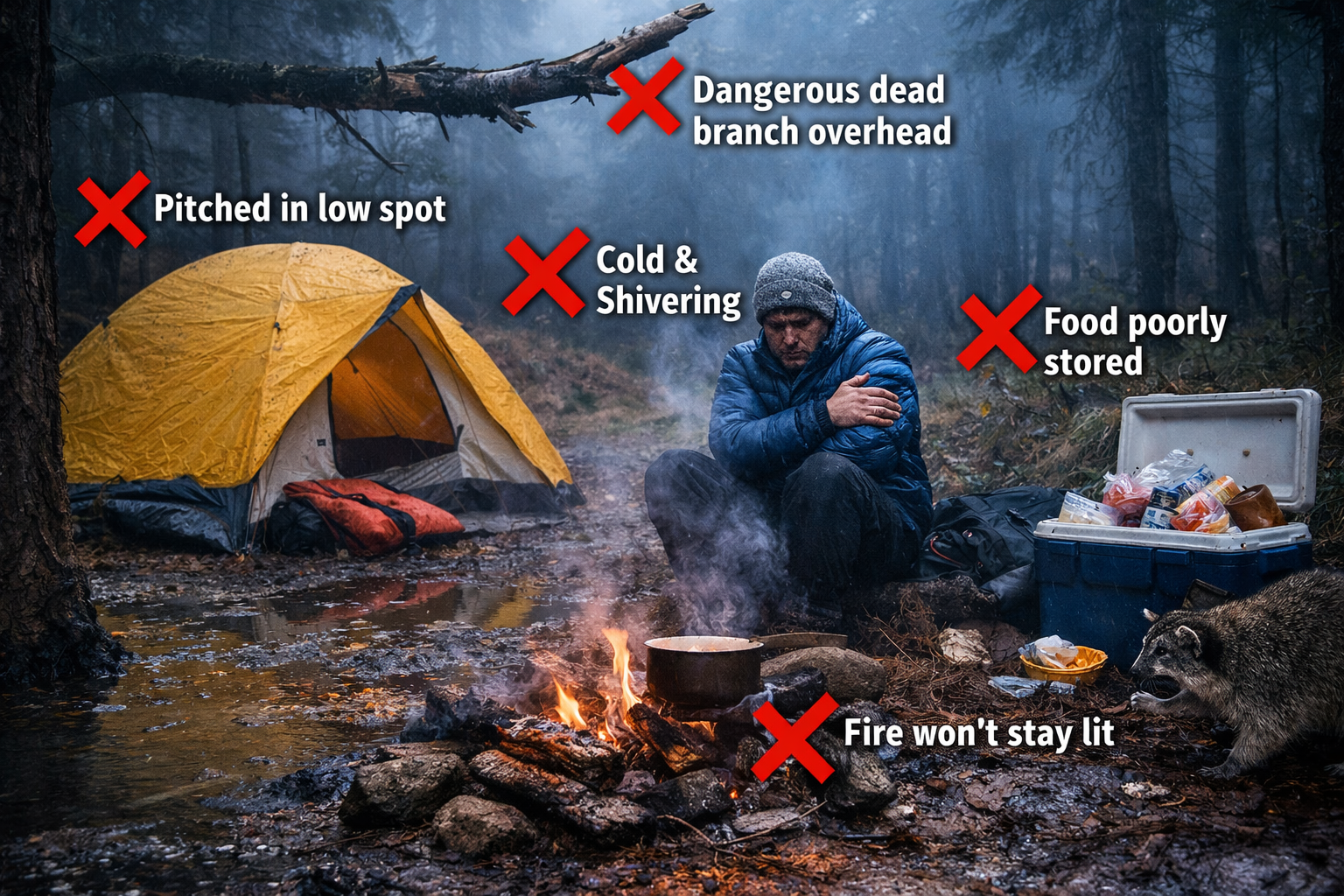
Camping Mistakes That Ruin Your Trip (And How to Fix Them)
Camping is meant to be a break from everyday stress, yet for many people it becomes uncomfortable, frustrating, or exhausting far sooner than expected. When camping trips go wrong, it is rarely because of dramatic weather events or bad luck. In most cases, trips fail because of small, common mistakes that quietly stack up over time.
A slightly uneven campsite, poor insulation choices, or inadequate preparation may not seem serious at first. However, once fatigue sets in and temperatures drop, those small issues become the difference between a restful night and a miserable one. Comfort, warmth, and energy are closely linked, and when one suffers, the entire experience is affected.
This guide explains the most common camping mistakes that ruin trips, why they happen, and how to fix them properly. These mistakes affect beginners and experienced campers alike. By understanding and avoiding them, you can dramatically improve sleep quality, reduce stress, and make camping something you genuinely look forward to.
Choosing the Wrong Campsite Location
One of the most common and damaging camping mistakes is choosing a campsite too quickly. Many campers pitch their tent as soon as they find a space that looks flat, without considering how the ground behaves overnight.
Even minor slopes can cause discomfort. Sleeping on uneven ground leads to constant repositioning, pressure on hips and shoulders, and poor rest. Low-lying areas often collect cold air and water, increasing the risk of damp conditions or flooding during rain. Exposed sites amplify wind, making nights feel colder and noisier than expected.
Overhead hazards are another concern. Dead branches, unstable trees, and loose debris are often overlooked, especially in wooded campsites.
How to fix it:
Take time to assess the area before setting up. Choose level, slightly elevated ground with natural wind protection. Avoid dips, dry stream beds, and areas where rainwater would naturally flow. Look upward for dead branches and position your tent so entrances and vents are not facing directly into the wind. A well-chosen campsite improves warmth, safety, and sleep quality all at once.
What Makes a Good Location to Camp (And Where to Look)
Choosing a good camping location goes beyond finding an empty space to pitch a tent. The best camping spots balance comfort, safety, shelter, and access, while avoiding environmental risks that can ruin a trip overnight.
Understanding what makes a location suitable helps you make better decisions whether you are camping at an established campsite or choosing a wild camping spot.
Flat, Elevated Ground
The best places to camp are flat but slightly elevated. Elevated ground allows rainwater to drain away naturally and prevents cold air from pooling around your tent overnight. Even a small rise of a few inches can make a noticeable difference in warmth and dryness.
Avoid depressions, valleys, and obvious water channels, even if they appear dry when you arrive. These areas often collect water during rain and feel significantly colder at night.
Natural Wind Protection
Wind exposure is one of the biggest factors affecting night-time comfort. Campsites that are fully exposed to open fields, ridgelines, or large bodies of water often experience stronger winds after sunset.
Good camping locations use natural wind breaks, such as:
- Tree lines
- Bushes or shrubs
- Rock formations
- Gentle terrain folds
These features reduce wind chill without blocking airflow entirely, which helps manage condensation.
Safe Tree Coverage
Camping near trees can be beneficial, but only if done carefully. Healthy trees provide shelter from wind and sun, but dead or damaged trees pose serious risks.
A good camping location includes living trees with stable trunks, while avoiding:
- Dead branches overhead
- Leaning or damaged trees
- Areas with visible rot or loose bark
Always look up before pitching your tent.
Distance From Water Sources
Camping too close to rivers, lakes, or streams increases the risk of flooding, insects, and cold air accumulation. While water access is convenient, proximity often causes more problems than benefits.
A good rule is to camp at least 60 metres (200 feet) away from water sources. This reduces moisture issues, insect activity, and overnight temperature drops while still allowing easy access when needed.
Ground Conditions and Drainage
The best camping ground feels firm but not rocky. Very soft ground can become muddy after rain, while rocky ground leads to poor sleep and difficulty securing tent stakes.
Before setting up, check:
- How the ground feels underfoot
- Whether water would flow away or pool
- Whether tent stakes will hold properly
Well-draining soil improves warmth, dryness, and overall comfort.
Orientation of Your Tent
A good location also allows you to orient your tent correctly. Positioning entrances and vents away from prevailing wind reduces heat loss and prevents cold drafts. Morning sun exposure can help dry condensation and warm the tent naturally.
Avoid positioning doors downhill or directly facing open wind corridors.
Established Campsites vs Wild Camping
Established campsites often provide level ground, drainage planning, and natural shelter, making them ideal for beginners. These sites are usually designed with comfort and safety in mind.
Wild camping locations require more careful assessment. While they offer solitude and flexibility, campers must evaluate terrain, weather exposure, and safety independently.
In both cases, the principles of good campsite selection remain the same.
Locations to Avoid When Camping
Some locations consistently lead to poor experiences and should be avoided whenever possible:
- Valley bottoms where cold air settles
- Dry riverbeds or flood plains
- Exposed ridgelines
- Animal trails and paths
- Areas directly under dead trees
Avoiding these locations prevents many of the most common camping problems before they start.
Why Location Matters More Than Gear
Even the best camping gear cannot compensate for a poorly chosen location. A good campsite improves warmth, reduces condensation, enhances sleep quality, and lowers stress throughout the trip.
Choosing the right location is one of the most effective ways to improve camping comfort without spending any money.
Underestimating Night-Time Temperatures
Many campers assume that warm daytime weather guarantees comfortable nights. In reality, temperatures can drop quickly after sunset, particularly in open landscapes, forests, or higher elevations.
Ground temperature is often significantly colder than the surrounding air. Heat is lost through conduction when your body contacts the ground, and this loss happens faster than most people expect. Wind exposure further increases heat loss, even on calm-looking evenings.
Weather forecasts focus on air temperature, not ground exposure, humidity, or wind chill. This leads many campers to underprepare for overnight conditions.
How to fix it:
Plan for overnight temperatures rather than daytime highs. Assume nights will feel colder than forecasted, especially if you are camping away from sheltered areas. Proper insulation and wind protection are essential for maintaining warmth.
Sleeping Directly on the Ground Without Proper Insulation
Sleeping directly on the ground is one of the biggest reasons campers wake up cold, sore, and exhausted. While sleeping bags provide insulation around the body, they lose effectiveness when compressed underneath your weight.
This results in heat being drawn away from your body throughout the night. Cold backs, hips, and shoulders are common complaints, even when using a sleeping bag rated for the temperature.
Many campers attempt to solve this problem by buying thicker sleeping bags, which does not address the root cause.
How to fix it:
Always use a properly insulated sleeping pad. Ground insulation prevents heat loss through conduction and dramatically improves comfort. Even in mild weather, a quality sleeping pad makes a noticeable difference in sleep quality and energy levels the following day.
Choosing the Wrong Sleeping Bag
Sleeping bag temperature ratings are one of the most misunderstood aspects of camping gear. Many bags advertise extreme or survival ratings rather than realistic comfort ratings. While a bag may technically keep you alive at a certain temperature, that does not mean it will be comfortable.
Other issues include choosing bags that are too narrow, restrict movement, or are poorly suited to the season. Some campers sleep warmer or colder than average, and ignoring this leads to consistently uncomfortable nights.
How to fix it:
Choose sleeping bags based on comfort ratings, expected overnight temperatures, and personal sleep habits. Cold sleepers should always choose warmer options than forecasts suggest. A properly chosen sleeping bag reduces fatigue and improves overall enjoyment of the trip.
Poor Tent Ventilation and Condensation Build-Up
Condensation is one of the most frustrating and misunderstood camping problems. Many campers seal their tent completely in an attempt to retain warmth, only to wake up to wet walls, damp sleeping bags, and cold air.
Moisture builds up inside tents from breathing, damp clothing, and humidity. When airflow is restricted, this moisture condenses on tent walls and drips back onto gear.
How to fix it:
Ventilation is critical, even in cool weather. Use tent vents as designed and allow controlled airflow to let moisture escape. Position your tent to block direct wind while still allowing air movement. Dry air retains heat far better than damp air.
Overpacking and Bringing Unnecessary Gear
Overpacking is extremely common, especially among beginners. Bringing too much gear increases setup time, creates clutter, and makes campsites harder to manage. It also increases fatigue when carrying or organising equipment.
At the same time, many campers forget essential items that directly affect comfort, such as proper insulation or weather protection.
How to fix it:
Focus on systems rather than individual items. Every piece of gear should serve a clear purpose. Prioritise sleep systems, shelter, warmth, and food management before adding optional extras. Efficient packing leads to calmer, more enjoyable trips.
Poor Food Storage and Cooler Management
Food problems can quickly ruin morale on a camping trip. Melted ice, spoiled food, leaking containers, and wildlife interference are common results of poor food storage planning.
On longer trips, inadequate food management often limits meal options and increases stress, particularly in warm weather.
How to fix it:
Use food storage solutions suited to the length of your trip and the climate. Separate chilled food from dry goods, minimise how often coolers are opened, and plan meals around realistic cooling capacity. Proper food storage keeps meals enjoyable and stress-free.
Ignoring Weather Preparation
Weather changes rapidly outdoors, and failing to prepare for rain, wind, or intense sun exposure can turn a comfortable campsite into a miserable one. Wet clothing, flooded tents, and exposure-related fatigue are common issues.
Many campers underestimate how quickly conditions can change, especially overnight.
How to fix it:
Pack lightweight, versatile weather protection and understand how your campsite reacts to rain and wind. Smart preparation focuses on adaptability rather than carrying excessive gear.
Using New Gear for the First Time at Camp
Many camping problems occur because equipment is used for the first time once the trip has already begun. Missing parts, confusing setup instructions, and unexpected failures cause unnecessary frustration.
Learning how to use gear under time pressure or poor weather often leads to mistakes.
How to fix it:
Test all gear at home before leaving. Set up tents, inflate sleeping pads, check cooler seals, and ensure nothing is missing. Familiarity improves confidence and efficiency at camp.
Failing to Plan for Comfort Beyond Sleeping
Many campers focus entirely on sleeping gear while ignoring daytime comfort. Sitting on cold ground, poor lighting, and inadequate shelter from sun or rain all contribute to fatigue.
Discomfort during the day reduces energy and patience, making nights feel worse as well.
How to fix it:
Plan for comfort throughout the day. Simple seating solutions, organised gear storage, and shade management improve overall enjoyment and reduce exhaustion.
Not Managing Energy and Fatigue
Camping often involves physical activity, from setting up camp to hiking or cooking. Poor sleep, inadequate nutrition, and overexertion compound quickly.
Fatigue increases the likelihood of mistakes and reduces enjoyment.
How to fix it:
Pace activities realistically, prioritise rest, and maintain regular meals. Proper energy management makes camping far more enjoyable and safer.
Having No Backup Plan
Even well-planned trips encounter unexpected issues. Weather changes, gear fails, and plans shift. Without a backup plan, small problems escalate quickly.
How to fix it:
Always plan basic contingencies. Carry spare insulation, simple backup meals, and know your exit options. Confidence outdoors comes from knowing you can adapt.
Final Thoughts
Camping trips are rarely ruined by one major mistake. They are ruined by multiple small issues that slowly drain comfort, warmth, and morale. When the fundamentals are handled correctly, camping becomes easier, safer, and far more enjoyable.
By avoiding these common mistakes, you improve sleep quality, maintain energy levels, and create a far better overall experience. Successful camping is about preparation, not excess gear.

