
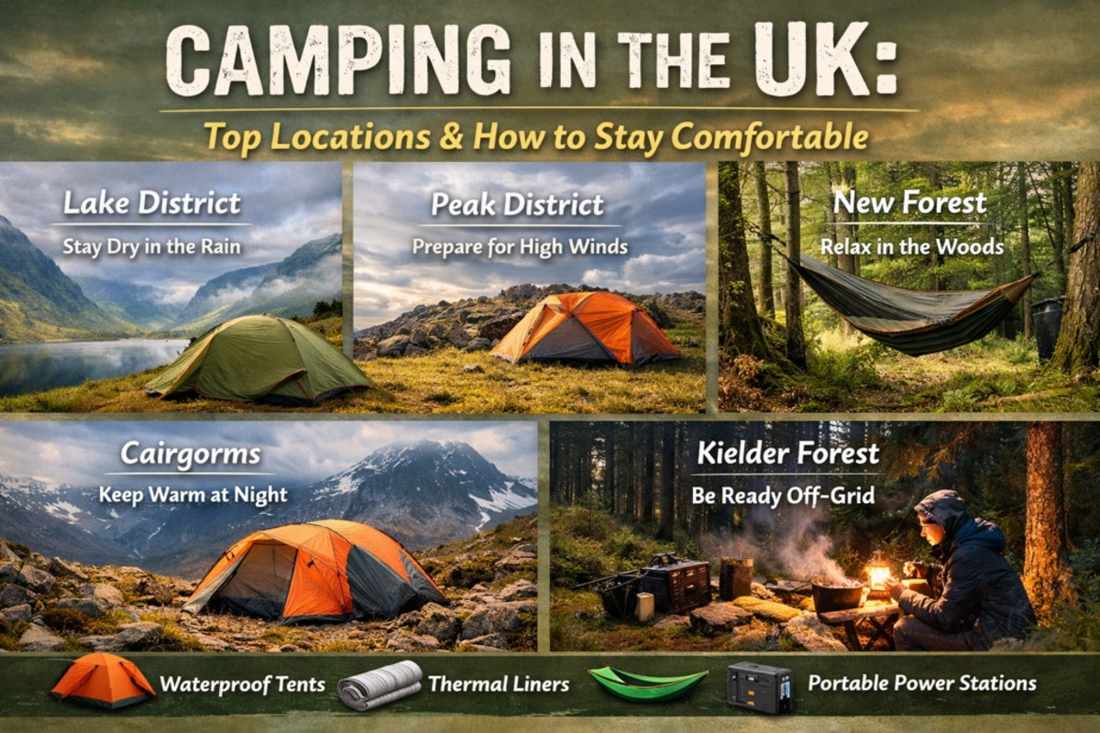
Popular Camping Locations in the UK (And How to Camp Comfortably in Each One)
Popular Camping Locations in the UK and How to Camp Comfortably in Each One
Camping in the UK offers a huge variety of landscapes, climates, and conditions. From sheltered woodland and rolling countryside to exposed moorland and remote mountain regions, each location presents a different set of challenges. While this variety is part of the appeal, it is also the reason many camping trips become uncomfortable.
A common mistake campers make is assuming that one setup works everywhere. In reality, comfort depends on how well your shelter, warmth, food setup, and daily routine match the specific environment you are camping in. A tent that performs perfectly in a forest campsite may struggle badly in open terrain, while a lightweight setup that feels ideal in summer can become inadequate in cooler or windier locations.
This guide explores popular camping locations across the UK and explains what type of camping experience each one offers, the most common comfort issues campers face there, and how to prepare properly. Rather than focusing on campsite theory, this article connects real locations to real-world problems and practical solutions.
Why Location-Specific Camping Preparation Matters
Camping advice is often presented as universal, but conditions are not. Ground moisture, wind exposure, temperature swings, and access to facilities vary dramatically between regions. These factors influence how warm you stay at night, how dry your gear remains, and how much effort daily tasks require.
When your setup matches the location, camping feels easy. When it does not, small inconveniences compound quickly. Poor sleep leads to low energy, which makes simple problems feel overwhelming. Location-aware preparation prevents this cycle and allows your gear to perform as intended.
New Forest National Park – Beginner-Friendly and Low Stress
The New Forest National Park is widely considered one of the most forgiving camping regions in the UK. The terrain is mostly flat, ground conditions are generally firm, and campsites are often designed with spacing and comfort in mind. Tree cover provides shade and shelter without fully enclosing campsites, which helps balance airflow and warmth.
Because conditions here are mild, most comfort issues come from camp setup choices rather than environmental extremes. Campers often experience condensation from poor airflow, cold ground contact on cooler nights, and general discomfort during long evenings.
Improving airflow around camp rather than sealing tents completely is often the best solution in forested areas. Camping tarps and lightweight shelters provide rain protection while allowing moisture to escape, reducing condensation and improving comfort.
https://campingzilla.com/best-camping-tarps-and-shelters/
Forest campsites also work well for off-ground relaxation. Where trees are safely spaced, camping hammocks reduce contact with damp ground and provide a comfortable place to rest during the day.
https://campingzilla.com/best-hammocks-for-camping/
Peak District National Park – Variable Terrain and Wind Exposure
The Peak District is a favourite for weekend trips due to its accessibility and varied terrain. In a short distance, campers can encounter sheltered valleys, rocky ground, and open moorland. This makes it an excellent region for refining setups, but it also exposes weaknesses quickly.
Wind is the dominant challenge here. Open areas that feel calm during the day can become windy overnight, leading to tent noise, heat loss, and restless sleep. Ground conditions also vary, which can make pitching more difficult.
Using tents designed specifically for windy conditions significantly improves stability and reduces stress in exposed areas. Stronger pole structures and aerodynamic designs make a noticeable difference.
https://campingzilla.com/best-camping-tents-for-windy-conditions/
Temperature drops are also common, especially outside peak summer. Instead of changing sleeping bags, many campers add thermal sleeping bag liners to increase warmth without increasing bulk.
https://campingzilla.com/best-thermal-liners-for-sleeping-bags/
Lake District National Park – Rain, Valleys, and Long Stays
The Lake District is one of the most iconic camping regions in the UK, but it also presents persistent comfort challenges. Rain is frequent, valleys can trap moisture and cold air, and weather conditions change quickly.
Campers here often struggle with wet ground, condensation, and prolonged damp conditions, especially on multi-day trips. Even good tents can feel uncomfortable if ground protection is inadequate.
Choosing waterproof tents designed for heavy rain improves resistance to prolonged wet weather and helps manage internal moisture more effectively.
https://campingzilla.com/best-waterproof-tents-for-rainy-camping/
Ground moisture is another major issue. A durable camping ground sheet or tent footprint creates a barrier that prevents dampness from seeping into sleeping areas, improving warmth and comfort over several nights.
https://campingzilla.com/best-ground-sheets-for-camping/
Brecon Beacons National Park – Cold Evenings and Open Skies
The Brecon Beacons are known for quieter camping locations and excellent night skies. Clear skies, however, often mean rapid heat loss after sunset. Even in warmer months, campers frequently report cold evenings and uncomfortable nights.
Wind exposure in open areas and cold ground contribute to these issues, particularly for campers who rely on minimal insulation.
Adding flexible insulation such as camping blankets improves comfort around camp and inside tents without committing to heavier sleep systems.
https://campingzilla.com/best-camping-blankets-for-cold-nights/
Because campsites are often remote and dark, reliable camping headlamps and lanterns improve safety and comfort during evening activities.
https://campingzilla.com/best-camping-headlamps-and-lanterns/
Cairngorms National Park – Cold, Remote, and Demanding
The Cairngorms National Park is best suited to experienced campers. Even in summer, nights can be cold, wind exposure is common, and shelter options may be limited. Weather changes quickly, and conditions can feel harsh compared to other UK locations.
Shelter strength becomes a priority here. Four-season camping tents provide improved wind resistance, stronger structures, and better performance in variable conditions.
https://campingzilla.com/best-4-season-camping-tents/
Remote trips also increase reliance on electronics for navigation and safety. Portable power stations help keep essential devices charged, particularly in cold conditions where batteries drain faster.
https://campingzilla.com/best-portable-power-stations-for-camping/
Kielder Forest – Woodland Camping With Limited Facilities
Kielder Forest offers deep woodland, low light pollution, and a strong sense of isolation. While trees provide shelter from wind, limited sunlight can lead to cooler, damper conditions, especially outside summer.
Cooking and warmth become central comfort concerns here. Compact backpacking camping stoves allow quick meal preparation without carrying heavy equipment.
https://campingzilla.com/best-camping-stoves-for-backpacking/
Because facilities are limited, carrying a well-stocked camping first aid kit is especially important when camping in remote forest environments.
https://campingzilla.com/best-first-aid-kits-for-camping/
Snowdonia National Park – Elevation and Rapid Weather Changes
Snowdonia offers dramatic scenery and challenging conditions. Elevation leads to cooler temperatures, while rapid weather changes test both shelter and planning.
Wind exposure and sudden rain are common, making stable shelter and waterproofing essential. Campers who prepare properly enjoy spectacular conditions, while those who underestimate the environment often struggle.
This region rewards conservative planning and adaptable setups.
Dartmoor National Park – Open Ground and Wind Awareness
Dartmoor’s open terrain allows flexibility in pitch selection but offers little natural shelter. Wind exposure is the primary challenge, especially near tors and high ground.
Campers here benefit from low-profile shelter, careful pitch orientation, and realistic expectations about comfort levels in exposed environments.
Final Thoughts
Camping comfort is not about having the best gear or the lightest setup. It is about understanding how different locations affect warmth, shelter, and daily routines. When preparation matches the environment, camping becomes relaxing instead of demanding.
By learning how different UK camping locations behave and preparing accordingly, you reduce discomfort, sleep better, and enjoy the experience rather than constantly solving problems.

