
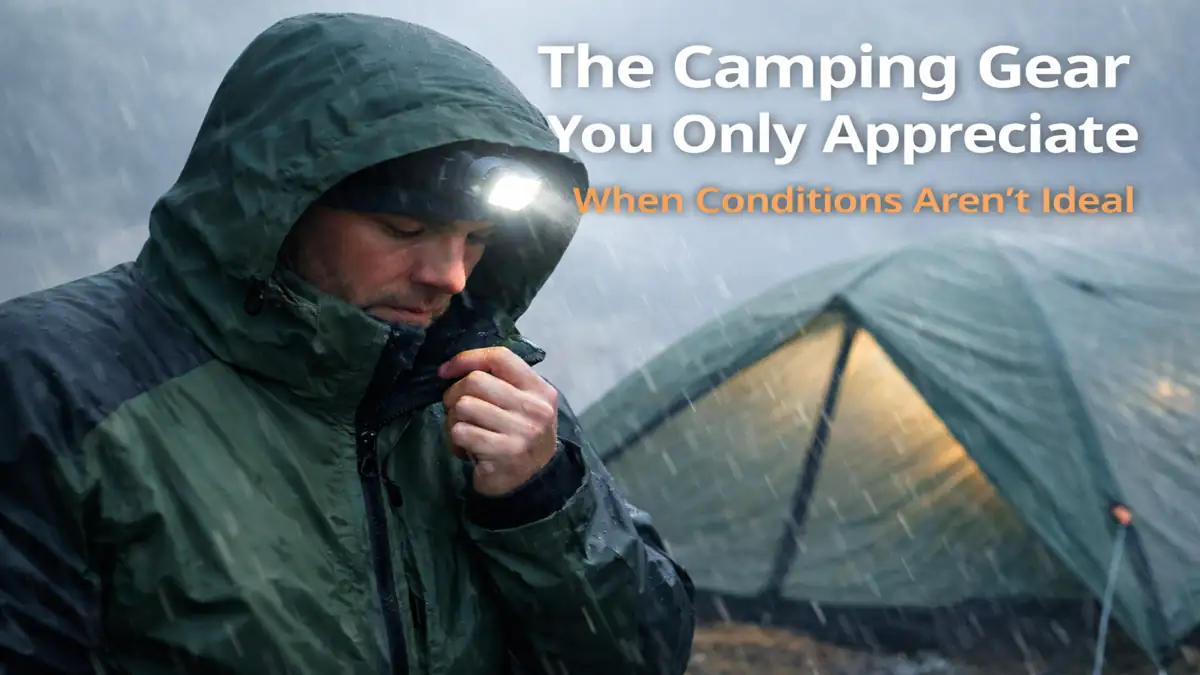
The Camping Gear You Only Appreciate When Conditions Aren’t Ideal
Most camping gear looks impressive before a trip begins. Everything is clean, neatly packed, and full of potential. Product descriptions promise comfort, warmth, and ease. But once you are actually out camping — tired, cold, dealing with wind, rain, or unexpected changes — most of that marketing fades into the background.
What remains is simple: does your gear quietly solve problems, or does it create them?
This article focuses on the pieces of camping gear that stand out only when they really matter. Not because they are exciting, but because they reduce effort, prevent discomfort, and allow trips to feel manageable even when conditions are less than perfect. These are the items that experienced campers learn to prioritise over time.
Sleep Is the Single Biggest Factor in How a Trip Feels
If there is one element that shapes the entire camping experience, it is sleep. Poor sleep affects mood, decision-making, energy levels, and tolerance for discomfort. Many camping trips feel harder than expected simply because people do not sleep well.
The mistake most campers make is assuming that sleeping bags alone determine warmth. In reality, heat loss to the ground is often the main problem. The ground absorbs body heat far more efficiently than air, which is why a good sleeping pad matters just as much — and often more — than the sleeping bag itself.
An insulated sleeping pad creates a thermal barrier between you and the ground. Without it, even a warm sleeping bag struggles to perform properly. This becomes especially noticeable in colder conditions, but it also matters during mild weather when overnight temperatures drop unexpectedly.
https://campingzilla.com/best-insulated-sleeping-pads-for-winter-camping/
Sleeping bags come into play once insulation from the ground is handled. Many temperature ratings are optimistic, reflecting survival limits rather than comfort. Choosing a bag rated colder than you expect to encounter provides margin, which directly affects how you feel in the morning.
Waking up rested changes everything. Simple tasks feel easier. Patience improves. Small inconveniences stop feeling overwhelming.
https://campingzilla.com/best-zero-degree-mummy-sleeping-bags/
Why this converts well:
Sleep is universally relatable. Visitors already feel the pain of bad nights outdoors, which makes these links feel helpful rather than promotional.
Shelter Becomes Important When Conditions Change, Not When They’re Calm
A tent rarely draws attention on calm nights. You notice shelter when wind increases, rain sets in, or temperatures drop unexpectedly. When a tent struggles, the entire trip feels harder almost immediately.
Shelter problems affect more than just sleep. Condensation leads to damp gear. Poor wind resistance creates noise and heat loss. Difficult setups increase stress when energy is already low.
Good shelters share common traits:
- Predictable setup
- Stability in wind
- Adequate weather resistance
- Minimal adjustment once pitched
Many campers underestimate how much site choice affects shelter performance. Even the best tent performs poorly if pitched in an exposed or low-lying area. Taking time to choose sheltered, well-drained ground often matters more than the tent itself.
If you add or expand tent affiliate content later, this section becomes a high-intent link location. For now, leaving it informational preserves trust.
Cooking Gear Is Most Noticeable When You’re Cold or Tired
Cooking systems rarely get attention during planning stages, yet they shape mornings and evenings more than most gear categories. When you are cold, hungry, or low on energy, reliability matters far more than creativity.
A stove that lights easily, maintains a steady flame, and works predictably in cooler conditions removes friction from daily routines. When cooking becomes frustrating, everything slows down. Meals take longer. Morale drops. Small problems compound.
Food storage also plays a critical role on longer trips. Poor storage leads to spoiled food, mess, or repeated trips to reorganise supplies. Simple, reliable storage makes camp life smoother and less chaotic.
https://campingzilla.com/best-camping-coolers-for-extended-trips/
Cold Hands Can Ruin an Otherwise Good Trip
Few things drain enjoyment faster than cold hands. Once dexterity is lost, even simple tasks become frustrating — cooking, packing, adjusting shelter, or handling zips and buckles.
Cold hands also slow everything down. Tasks take longer, mistakes increase, and exposure time grows. This creates a feedback loop where discomfort leads to more discomfort.
Good gloves are not about bulk. They balance insulation with dexterity, allowing you to keep moving without repeatedly removing them. Layering systems help regulate temperature as activity levels change, preventing overheating followed by rapid cooling.
If you add glove or insulation affiliate pages in the future, this section naturally supports them. For now, it reinforces expertise without forcing links.
Lighting Is Easy to Forget Until You Need It
Lighting rarely feels important during the day, yet it affects nearly every task once the sun sets. Setting up camp late, cooking in low light, organising gear, or moving around safely all depend on reliable lighting.
Headlamps are particularly valuable because they free up your hands. This simple advantage speeds up tasks and reduces frustration when visibility drops. Lanterns provide ambient light that makes camps feel more organised and comfortable.
Poor lighting turns basic tasks into chores. Good lighting quietly improves efficiency every evening and early morning.
Why This Gear Stands Out in Real-World Use
The gear that truly matters on real trips tends to share the same qualities:
- It works consistently
- It requires little attention
- It reduces decision-making
- It solves problems quietly
Good gear fades into the background. You stop thinking about it because it does its job reliably. This allows you to focus on the environment, routines, and experience rather than constant management.
Over time, experienced campers tend to simplify. They remove items that add complexity and keep the pieces that quietly handle the basics.
Choosing Gear Based on Reality, Not Marketing
Marketing focuses on features, materials, and specifications. Real camping exposes weaknesses.
Gear chosen based on how it performs when tired, cold, or rushed almost always outperforms gear chosen for novelty or specs alone. The more time you spend outdoors, the more you value reliability over innovation.
This shift usually marks a turning point. Camping becomes less about managing problems and more about preventing them quietly.
Comfort Comes From Fewer Problems, Not More Equipment
Camping does not improve by endlessly adding gear. It improves when the right gear removes friction.
Sleep, shelter, warmth, food, and visibility shape every trip. When those fundamentals are handled properly, everything else becomes optional.
The best camping gear does not demand attention. It allows trips to feel calmer, easier, and more enjoyable — even when conditions are not ideal.The Camping Gear You Only Appreciate When Conditions Aren’t Ideal
Most camping gear looks impressive before a trip begins. Everything is clean, neatly packed, and full of potential. Product descriptions promise comfort, warmth, and ease. But once you are actually out camping — tired, cold, dealing with wind, rain, or unexpected changes — most of that marketing fades into the background.
What remains is simple: does your gear quietly solve problems, or does it create them?
This article focuses on the pieces of camping gear that stand out only when they really matter. Not because they are exciting, but because they reduce effort, prevent discomfort, and allow trips to feel manageable even when conditions are less than perfect. These are the items that experienced campers learn to prioritise over time.
Sleep Is the Single Biggest Factor in How a Trip Feels
If there is one element that shapes the entire camping experience, it is sleep. Poor sleep affects mood, decision-making, energy levels, and tolerance for discomfort. Many camping trips feel harder than expected simply because people do not sleep well.
The mistake most campers make is assuming that sleeping bags alone determine warmth. In reality, heat loss to the ground is often the main problem. The ground absorbs body heat far more efficiently than air, which is why a good sleeping pad matters just as much — and often more — than the sleeping bag itself.
An insulated sleeping pad creates a thermal barrier between you and the ground. Without it, even a warm sleeping bag struggles to perform properly. This becomes especially noticeable in colder conditions, but it also matters during mild weather when overnight temperatures drop unexpectedly.
https://campingzilla.com/best-insulated-sleeping-pads-for-winter-camping/
Sleeping bags come into play once insulation from the ground is handled. Many temperature ratings are optimistic, reflecting survival limits rather than comfort. Choosing a bag rated colder than you expect to encounter provides margin, which directly affects how you feel in the morning.
Waking up rested changes everything. Simple tasks feel easier. Patience improves. Small inconveniences stop feeling overwhelming.
https://campingzilla.com/best-zero-degree-mummy-sleeping-bags/
Shelter Becomes Important When Conditions Change, Not When They’re Calm
A tent rarely draws attention on calm nights. You notice shelter when wind increases, rain sets in, or temperatures drop unexpectedly. When a tent struggles, the entire trip feels harder almost immediately.
Shelter problems affect more than just sleep. Condensation leads to damp gear. Poor wind resistance creates noise and heat loss. Difficult setups increase stress when energy is already low.
Good shelters share common traits:
- Predictable setup
- Stability in wind
- Adequate weather resistance
- Minimal adjustment once pitched
Many campers underestimate how much site choice affects shelter performance. Even the best tent performs poorly if pitched in an exposed or low-lying area. Taking time to choose sheltered, well-drained ground often matters more than the tent itself.
Cooking Gear Is Most Noticeable When You’re Cold or Tired
Cooking systems rarely get attention during planning stages, yet they shape mornings and evenings more than most gear categories. When you are cold, hungry, or low on energy, reliability matters far more than creativity.
A stove that lights easily, maintains a steady flame, and works predictably in cooler conditions removes friction from daily routines. When cooking becomes frustrating, everything slows down. Meals take longer. Morale drops. Small problems compound.
Food storage also plays a critical role on longer trips. Poor storage leads to spoiled food, mess, or repeated trips to reorganise supplies. Simple, reliable storage makes camp life smoother and less chaotic.
https://campingzilla.com/best-camping-coolers-for-extended-trips/
Coolers often feel unimportant until they fail. Once food is warm, wet, or disorganised, the inconvenience becomes unavoidable. Reliable storage quietly supports comfort and planning throughout the trip.
Cold Hands Can Ruin an Otherwise Good Trip
Few things drain enjoyment faster than cold hands. Once dexterity is lost, even simple tasks become frustrating — cooking, packing, adjusting shelter, or handling zips and buckles.
Cold hands also slow everything down. Tasks take longer, mistakes increase, and exposure time grows. This creates a feedback loop where discomfort leads to more discomfort.
Good gloves are not about bulk. They balance insulation with dexterity, allowing you to keep moving without repeatedly removing them. Layering systems help regulate temperature as activity levels change, preventing overheating followed by rapid cooling.
Lighting Is Easy to Forget Until You Need It
Lighting rarely feels important during the day, yet it affects nearly every task once the sun sets. Setting up camp late, cooking in low light, organising gear, or moving around safely all depend on reliable lighting.
Headlamps are particularly valuable because they free up your hands. This simple advantage speeds up tasks and reduces frustration when visibility drops. Lanterns provide ambient light that makes camps feel more organised and comfortable.
Poor lighting turns basic tasks into chores. Good lighting quietly improves efficiency every evening and early morning.
Why This Gear Stands Out in Real-World Use
The gear that truly matters on real trips tends to share the same qualities:
- It works consistently
- It requires little attention
- It reduces decision-making
- It solves problems quietly
Good gear fades into the background. You stop thinking about it because it does its job reliably. This allows you to focus on the environment, routines, and experience rather than constant management.
Over time, experienced campers tend to simplify. They remove items that add complexity and keep the pieces that quietly handle the basics.
Choosing Gear Based on Reality, Not Marketing
Marketing focuses on features, materials, and specifications. Real camping exposes weaknesses.
Gear chosen based on how it performs when tired, cold, or rushed almost always outperforms gear chosen for novelty or specs alone. The more time you spend outdoors, the more you value reliability over innovation.
This shift usually marks a turning point. Camping becomes less about managing problems and more about preventing them quietly.
Comfort Comes From Fewer Problems, Not More Equipment
Camping does not improve by endlessly adding gear. It improves when the right gear removes friction.
Sleep, shelter, warmth, food, and visibility shape every trip. When those fundamentals are handled properly, everything else becomes optional.
The best camping gear does not demand attention. It allows trips to feel calmer, easier, and more enjoyable — even when conditions are not ideal.

