
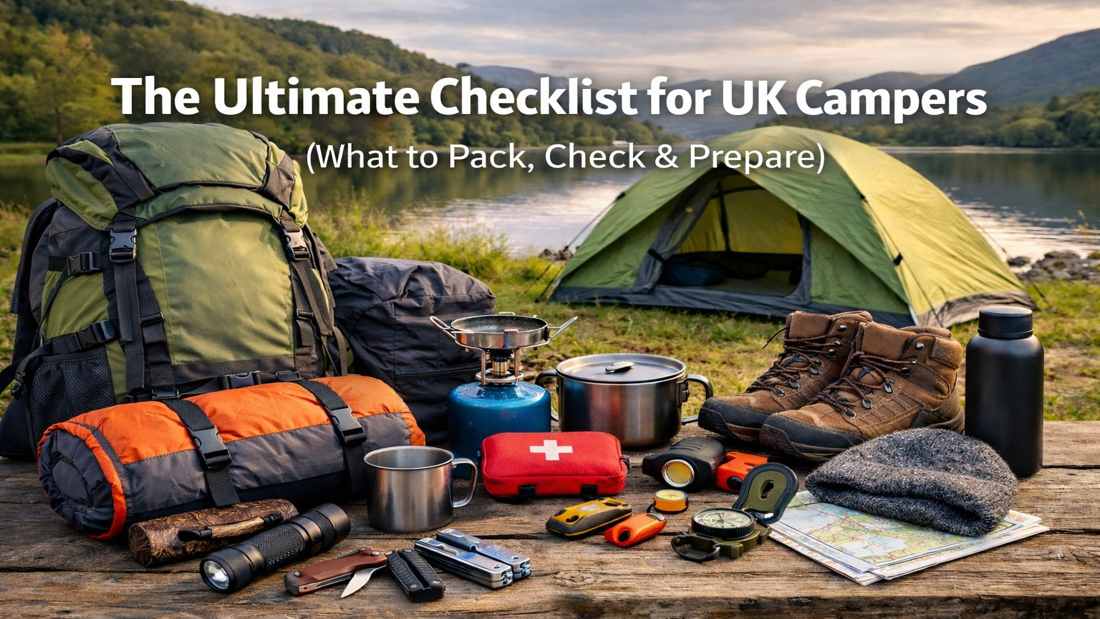
The Ultimate Checklist for UK Campers (What to Pack, Check & Prepare)
Camping in the UK is a rewarding way to explore the outdoors, offering everything from rugged coastlines and rolling countryside to national parks and quiet woodland sites. However, camping in the UK also comes with challenges that are very different from those found in warmer or more predictable climates. Sudden rain, strong winds, cold nights, and damp ground are common, even during summer months. Without proper preparation, these conditions can quickly turn an enjoyable trip into an uncomfortable or even unsafe experience.
This is why having a thorough and well-structured checklist is essential. A reliable camping checklist removes uncertainty, helps prevent common mistakes, and ensures you are prepared for changing conditions. This guide has been created specifically for UK campers, taking into account the climate, terrain, and typical campsite setups you are likely to encounter. Whether you are planning your first camping trip or refining your routine as an experienced camper, this checklist will help you pack correctly, prepare effectively, and camp with confidence.
Essential Camping Gear Checklist
Your core camping gear forms the foundation of your trip. In the UK, this gear must be able to handle moisture, wind, and fluctuating temperatures. Choosing reliable equipment and checking it before you leave can prevent many avoidable problems once you arrive at your campsite.
A tent suitable for UK weather conditions is one of the most important items on your checklist. It should offer a good level of waterproofing, including sealed seams and a durable groundsheet. Even small leaks can allow water to collect overnight, leading to damp sleeping conditions and damaged gear. It is also important to ensure that your tent has adequate ventilation, as poor airflow can cause condensation to build up inside, even in dry weather.
Spare tent pegs and guy lines are often overlooked but can be extremely useful. UK campsites can have hard ground, soft mud, or uneven surfaces, all of which can place extra strain on tent fixings. Having backups ensures your shelter remains secure in windy conditions.
Your sleeping setup is equally important. A sleeping bag rated for cooler temperatures is essential, as UK nights can be cold even in late spring or early autumn. Pairing your sleeping bag with an insulated sleeping mat or pad helps prevent heat loss to the ground, which is one of the main causes of discomfort while camping. A compact pillow or stuff sack filled with clothing can improve sleep quality without adding much weight or bulk.
Clothing and Footwear for UK Conditions
Clothing choices play a major role in comfort and safety when camping in the UK. Layering is essential, as it allows you to adapt quickly to changing temperatures and weather conditions.
Waterproof outer layers should always be packed, regardless of the forecast. Rain showers can arrive unexpectedly, and staying dry is critical for maintaining body heat. A breathable waterproof jacket and trousers provide protection without causing overheating during activity.
Warm mid-layers such as fleeces or insulated jackets are important for evenings and early mornings, when temperatures often drop. Moisture-wicking base layers help regulate body temperature by drawing sweat away from the skin, reducing the risk of chills.
Extra socks are a must. Wet feet are uncomfortable and can lead to blisters or cold-related issues. Packing more socks than you think you need ensures you always have a dry pair available. Footwear should be sturdy, supportive, and ideally waterproof. Walking boots or trail shoes designed for uneven terrain offer far better protection and comfort than casual trainers, especially on longer trips or muddy paths.
Cooking and Food Essentials
Cooking outdoors in the UK often involves dealing with wind, damp conditions, and limited shelter, so having dependable cooking equipment is crucial. A reliable camping stove that performs well in windy conditions should be part of every camper’s setup. Always bring enough fuel for the duration of your trip, plus a little extra in case cooking takes longer than expected.
Using a wind shield around your stove can significantly improve efficiency and reduce fuel consumption. Lightweight cookware such as a single pot, pan, mug, and basic utensils is usually sufficient for most trips. Choosing durable items that are easy to clean makes campsite cooking much easier.
Food planning should focus on meals that are simple to prepare and provide enough energy for outdoor activity. Warm meals and hot drinks are particularly valuable in cold or wet weather, as they help maintain body temperature and boost morale. High-energy snacks such as nuts, cereal bars, and dried fruit are useful for quick refuelling throughout the day.
Food storage is another important consideration. Resealable bags, containers, or insulated cool bags help keep food fresh and protected from moisture and wildlife. Clean-up supplies such as a sponge and biodegradable soap allow you to maintain hygiene and leave your campsite tidy.
Safety and Emergency Essentials
Safety should always be a priority when camping, regardless of experience level. A well-prepared camper is far better equipped to handle unexpected situations.
A basic first aid kit should include items for treating cuts, blisters, minor burns, and insect bites. Having these supplies readily available allows you to deal with small issues before they become bigger problems.
A reliable head torch or flashlight is essential for navigating your campsite after dark, especially during shorter daylight hours. Spare batteries or a rechargeable power bank ensure you are not left without light or communication. Carrying a whistle provides a simple but effective way to signal for help if needed.
Weather awareness is also a key safety factor. Checking forecasts before and during your trip allows you to adjust plans and avoid unnecessary risks. Understanding the early signs of hypothermia and knowing how to prevent heat loss is particularly important in the UK, where cold and damp conditions can develop quickly.
Preparing for UK Weather
UK weather is famously unpredictable, which makes preparation essential. Before setting off, you should check the forecast for both daytime and overnight conditions. This helps you decide what clothing and equipment to prioritise.
Rain protection should extend beyond your tent and jacket. Using dry bags or waterproof liners inside your backpack helps keep important items such as clothing and electronics dry. When pitching your tent, positioning it away from prevailing winds and ensuring all guy lines are properly tensioned improves stability and comfort.
Cold nights require additional planning. Changing into dry clothing reserved specifically for sleeping helps maintain warmth. An insulated sleeping mat and a suitable sleeping bag are critical, as cold ground can drain body heat even in mild weather. Hot drinks before bed can also help raise core temperature and improve sleep quality.
Campsite Planning and Environmental Responsibility
Understanding campsite rules and facilities before you arrive helps prevent unnecessary stress. Knowing where toilets, water points, and designated cooking areas are located improves convenience and safety. Familiarising yourself with arrival and departure times ensures you stay within campsite guidelines.
Environmental responsibility is an important part of camping. Packing rubbish bags, managing food waste properly, and respecting fire regulations help protect the natural environment and ensure campsites remain open and welcoming. Leaving your pitch exactly as you found it is a fundamental principle of responsible camping.
Common Camping Mistakes to Avoid
Many camping problems arise from simple oversights. Underestimating the weather is one of the most common mistakes, often leading to inadequate clothing or shelter. Failing to test equipment before leaving can result in broken or missing items when you need them most.
Overpacking is another common issue. Carrying unnecessary items adds weight and makes organisation difficult. At the same time, forgetting essential items such as spare clothing or safety equipment can compromise comfort and safety. Using a checklist helps strike the right balance.
Final Pre-Trip Checks
The night before your trip is the ideal time to complete final checks. Charging all devices, confirming bookings, and reviewing your checklist ensures nothing important is overlooked. Letting someone know your plans and expected return time adds an extra layer of safety, especially if you are camping in a remote area.
Conclusion
Camping in the UK can be an incredibly rewarding experience when approached with the right preparation. By following this comprehensive checklist, you can reduce stress, improve comfort, and stay safe in changing conditions. Proper planning allows you to focus on enjoying the outdoors rather than dealing with avoidable problems.
Saving this checklist and using it before every trip will help you build confidence and develop good camping habits that make every adventure more enjoyable.

