
Camping Routines That Make Trips Easier (Before, During, and After Camp)
Camping rarely goes wrong because of one big mistake. Instead, it becomes stressful when many small inconveniences stack up at the same time. Forgetting where you put your torch, struggling to find cooking equipment, waking up cold, or dealing with a messy campsite all drain enjoyment from the trip. Campers who seem relaxed and organised are usually not better equipped — they have simply built reliable routines that remove friction from each stage of the experience.
This guide focuses entirely on behavioural habits and routines, not gear recommendations or survival techniques. These are the systems that experienced campers use subconsciously to keep trips calm, comfortable, and enjoyable, regardless of weather, campsite size, or length of stay.
Before You Leave: Routines That Prevent Stress Later
Preparation does not need to be complicated to be effective. In fact, overly complex checklists often cause more confusion than clarity. The most effective camping preparation routines focus on organisation and flow, rather than quantity.
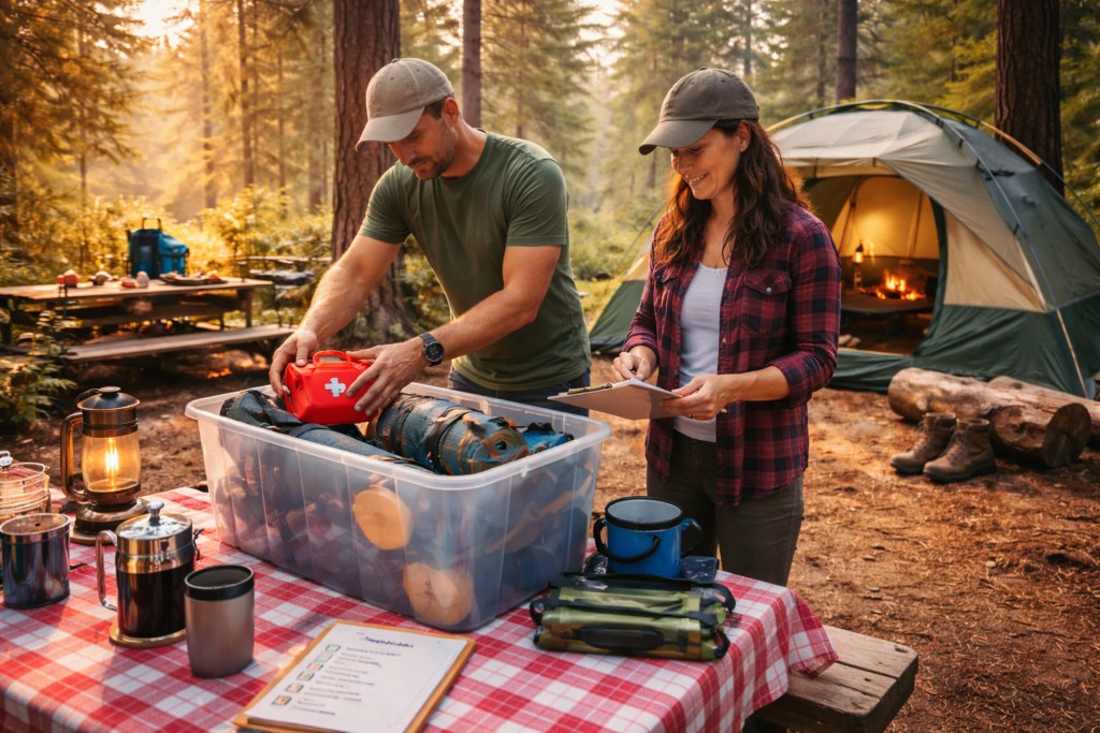
One of the most useful habits is packing by purpose rather than by individual item. When items are packed randomly, it becomes difficult to find what you need at camp, especially when light is low or weather is poor. Packing by purpose creates natural systems that remain useful throughout the trip.
For example, grouping all sleeping-related items together ensures that when it is time to settle in for the night, everything you need is already in one place. Cooking items grouped together prevent unnecessary rummaging and reduce setup time. Comfort items grouped together make evenings more relaxed and enjoyable.
This approach also makes unpacking faster at the end of the trip and highlights missing or unused items more clearly.
Preparing a “first 10 minutes” arrival routine
Arriving at a campsite can be the most chaotic part of the entire trip. People are tired from travel, weather conditions may be poor, and daylight may be limited. A simple routine that experienced campers rely on is preparing a dedicated arrival kit.
This small bag or container should include only the items needed during the first few minutes on site. Having these essentials immediately available allows you to pitch the tent and establish shelter without stress. It prevents the common frustration of unpacking half the car just to find a mallet or torch.
This routine is particularly valuable when camping with children or arriving late in the evening, when patience and energy are already low.
Using visual checks instead of lists
Written packing lists are helpful, but they often miss contextual items. A more effective habit is performing a visual rehearsal before leaving home. Take a moment to imagine yourself cooking dinner, getting ready for bed, and waking up in the morning at camp.
This mental walkthrough frequently reveals missing items such as mugs, phone chargers, warm layers, or toiletries that lists overlook. Over time, this routine becomes faster and more accurate than relying on written lists alone.
Arrival at Camp: Establish Order Early
The first twenty minutes at camp often determine how organised the rest of the trip will feel. Rushing or unloading everything at once usually leads to clutter and confusion.
A reliable habit is pitching the tent before unloading most other gear. Establishing shelter early provides immediate protection from weather and creates a clear focal point around which the rest of the campsite can be organised.
Once the tent is in place, decisions about storage, cooking, and seating become easier because there is a physical reference point for everything else.
Creating functional campsite zones
Even small campsites benefit from defined areas. Establishing simple zones helps keep gear organised and reduces accidents. These zones do not need physical markers — they only need consistency.
A sleeping zone should remain calm and uncluttered. Cooking areas should be kept separate to reduce food smells and fire risk. Storage areas should remain tidy and accessible. Seating or fire areas should allow clear movement without crossing through cooking or sleeping spaces.
Making these decisions early prevents constant rearranging later.
Managing movement and walkways
One overlooked routine is consciously observing how people move through the campsite. Bags, coolers, and chairs are often placed without considering natural walking paths. Taking a moment to adjust layout prevents tripping hazards and keeps the site feeling open rather than cramped.
This habit is especially important at night, when visibility is limited.
Daily Habits That Make Camping Feel Easier
Camping days feel smoother when simple daily routines are followed consistently. The goal is not perfection, but resetting the campsite just enough to prevent buildup of mess and stress.
One of the most effective habits is performing a short evening reset. This involves packing away loose items, wiping down surfaces, securing food, and checking lighting before bedtime. Spending even five minutes on this routine dramatically improves the feel of the campsite the next morning.
Waking up to an organised space reduces stress immediately and sets a calmer tone for the day.
Preparing for the morning before sleeping
Another valuable habit is preparing morning essentials the night before. Laying out clothes, grouping breakfast items, and placing torches within reach eliminates rushed decisions and frustration when energy is low.
This routine is especially helpful during cold mornings, when fumbling for clothes or equipment can quickly dampen morale.
Keeping essential items in fixed locations
Designating consistent locations for essential items such as keys, torches, shoes, and cooking tools prevents repeated searching. Over time, this creates muscle memory that makes camping feel effortless.
Even when different campsites are used, maintaining the same internal organisation helps routines remain familiar.
Food Routines That Reduce Mental Load
Cooking at camp is one of the most enjoyable parts of camping, but it can also become stressful if poorly managed. The most effective camping food routines focus on simplicity and flexibility.
Low-decision meals reduce mental fatigue. Meals that can adapt to ingredient changes or timing issues feel far less stressful than complex recipes. Preparing ingredients at home where possible further reduces mess and effort at camp.
Cleaning while cooking prevents end-of-day exhaustion and keeps the campsite hygienic. This habit also reduces the risk of attracting wildlife and keeps cooking areas usable throughout the trip.
Comfort and Clothing Habits
Comfort is not solely determined by equipment quality. Simple routines often make a bigger difference than expensive upgrades.
Laying out clothing before bed, separating wet and dry items, and airing gear when weather allows all contribute to better sleep and overall comfort. These habits prevent dampness, odours, and unnecessary discomfort over longer trips.
Maintaining these routines consistently makes camping feel easier even in less-than-ideal conditions.
Evening Routines That Improve Sleep
Sleep quality has a major impact on how enjoyable a camping trip feels. Evening routines help the body transition into rest more naturally.
Gradually reducing light levels, minimising noise, and keeping nighttime essentials within reach all contribute to better sleep. Small habits such as placing shoes and torches near the tent entrance prevent disruptive fumbling during the night.
These routines are particularly valuable when camping with others, as they reduce disturbance and improve overall group comfort.
Leaving Camp: Habits That Help Future Trips
Breaking camp is often rushed, but adopting a few simple habits makes future trips easier. Packing with future use in mind helps identify damaged or missing items early and prevents unpleasant surprises later.
Performing a final ground check ensures that small items such as pegs or utensils are not left behind. Keeping brief notes after each trip about what worked and what did not creates continuous improvement without spending additional money.
Why Routines Matter More Than Equipment
Camping routines reduce stress, prevent common frustrations, and create a sense of control even in unpredictable environments. They are especially valuable for family camping, short trips, and campers who frequently change locations.
Over time, these habits become automatic, allowing campers to focus on enjoyment rather than logistics. When routines are strong, camping feels easier regardless of conditions.
For further advice on practical camping tips and support for your perfect camping trip. Please visit: Practical Camping Advice That Makes Outdoor Trips Easier – Camping Zilla

