
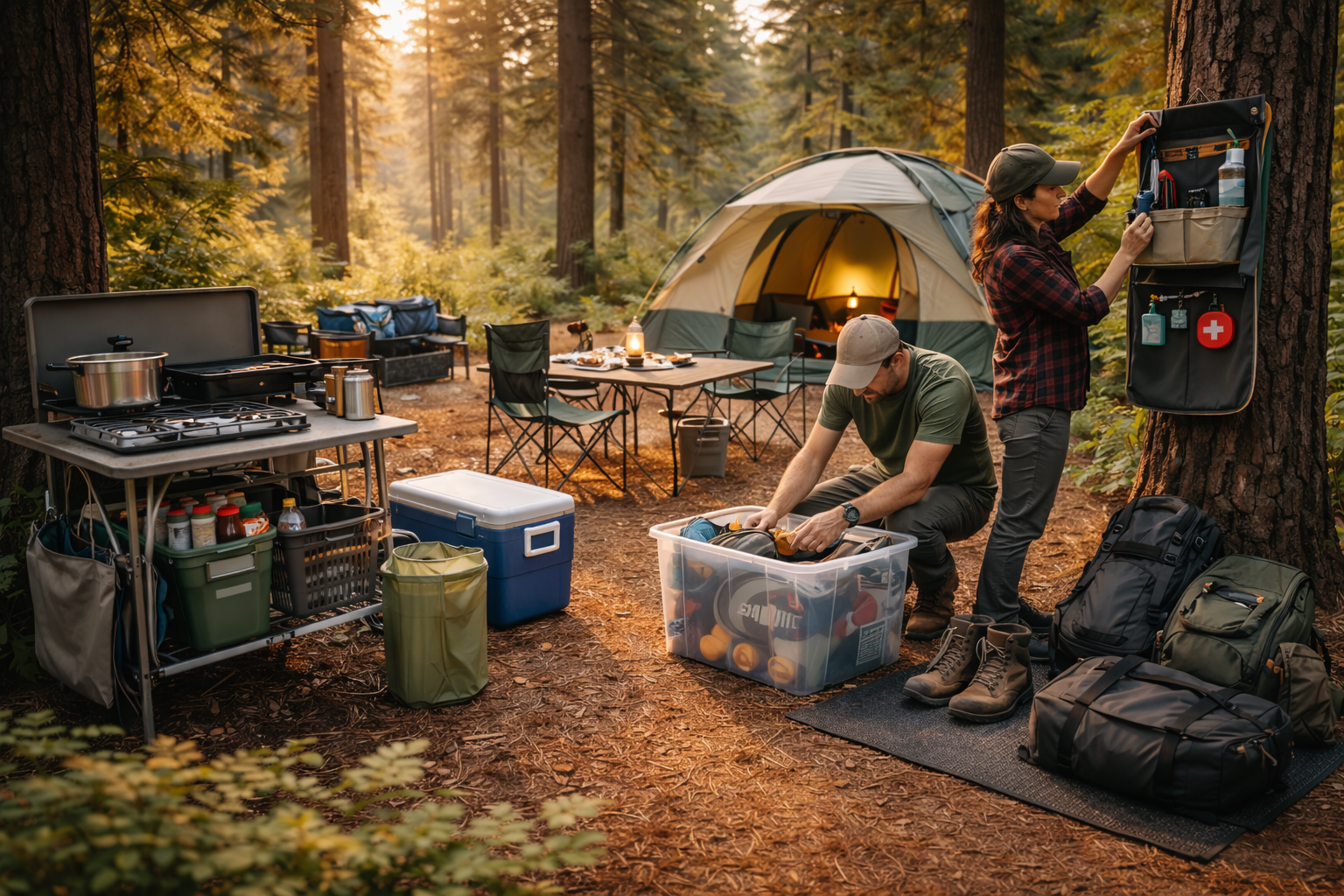
Camping Organisation Tips That Keep Campsites Tidy (Without Extra Gear)
A tidy campsite is not about being overly neat or disciplined. It is about reducing friction so that everyday camping tasks feel easier rather than frustrating. When campsites become cluttered, even simple activities like cooking, relaxing, or getting ready for bed take longer than they should. Organisation is what allows camping to feel calm instead of chaotic.
Most campers assume that staying organised requires additional storage boxes, specialist equipment, or complex systems. In reality, the most organised campsites rely on simple habits and consistent placement, not more gear. These camping organisation tips focus on practical, repeatable behaviours that keep campsites tidy without adding work or cost.
Why Campsites Become Disorganised So Quickly
Campsites usually start off neat because everything has just been unpacked with intention. Over time, disorder creeps in because items are placed wherever space is available rather than where they belong. Once this happens, gear loses its “home” and clutter builds rapidly.
Another major cause of campsite mess is fatigue. After a full day outdoors, people are less inclined to tidy properly. Without simple organisation routines in place, items get dropped, surfaces fill up, and the campsite gradually feels smaller and more cramped.
Understanding this pattern makes it clear why organisation habits matter more than storage solutions.
Limit How Much Gear Is Actively in Use
One of the most effective campsite organisation habits is controlling how much equipment is unpacked at any given time. When everything is accessible all at once, nothing stays organised for long.
Only keep items out that are:
- Being used that day
- Required for safety or access
- Sensitive to weather
Everything else should remain packed away until needed. This habit alone dramatically reduces clutter and makes the campsite easier to manage.
Give Every Item a Consistent Home
Organisation depends on consistency rather than precision. Every frequently used item should return to the same place each time it is used. This applies even when the campsite layout changes.
For example, torches should always be placed in the same container or pocket. Cooking utensils should always return to the same storage location. Shoes should be placed in the same spot near the tent entrance.
When items have consistent homes, searching disappears and mess becomes far less likely to accumulate.
Protect Flat Surfaces From Becoming Dumping Grounds
Tables, benches, and coolers are essential at camp, but they also attract clutter. Once flat surfaces fill up, the campsite quickly feels disorganised.
A useful habit is treating flat surfaces as working areas rather than storage areas. When an item is no longer actively being used, it should be returned to its home rather than left on a surface.
This keeps cooking areas functional and prevents frustration when space is needed quickly.
Use Vertical Space Whenever Possible
Vertical space is often underused at campsites. Hanging items rather than placing them down helps keep walkways and surfaces clear.
Useful items to hang include:
- Jackets and layers
- Head torches and lanterns
- Cooking utensils
Tent loops, chair backs, and tree branches (where permitted) can all serve as simple hanging points without adding extra equipment.
Separate Clean and Dirty Gear From Day One
Mixing clean and dirty items is one of the fastest ways to lose control of campsite organisation. Establishing separation early prevents mess from spreading.
Designate specific areas or containers for:
- Dirty clothing
- Used cooking equipment
- Muddy footwear
This prevents cross-contamination and reduces the amount of cleaning required later in the trip.
Create a Simple Daily Reset Routine
A tidy campsite does not require constant attention, but it does benefit from small, regular resets. A short daily routine keeps mess from becoming overwhelming.
A daily reset typically includes:
- Returning loose items to their homes
- Clearing cooking and eating surfaces
- Securing food and rubbish
- Folding or packing unused items
Spending a few minutes on this routine maintains order without feeling like work.
Keep Walkways Clear for Safety and Comfort
Organisation is not just about appearance. Clear walkways improve safety, especially at night when visibility is limited.
Pay attention to:
- Tent entrances
- Paths between seating and cooking areas
- Routes to lighting or water
Keeping these areas clear prevents trips and injuries while making the campsite feel more open and comfortable.
Use Containers as Categories, Not Catch-All Storage
Containers are useful organisational tools, but only when used intentionally. The most effective campsites treat containers as categories, not general storage.
Each container should have a clear purpose, such as:
- Cooking supplies
- Lighting and power
- Evening comfort items
Mixing unrelated items defeats the purpose and increases searching time.
Food Organisation That Prevents Mess and Attractants
Food areas are often the messiest part of a campsite and require special attention. Organisation here affects hygiene, efficiency, and safety.
Effective food organisation habits include:
- Keeping only the current meal accessible
- Storing all food together in sealed containers
- Cleaning surfaces immediately after use
These habits reduce clutter and help prevent wildlife issues.
Clothing Organisation That Saves Time and Stress
Clothing often creates hidden mess because it is used frequently and stored casually. Simple habits make a noticeable difference.
Keeping tomorrow’s clothes together, separating worn and unworn items, and folding or rolling clothing rather than stuffing it away all reduce morning stress and confusion.
These habits are especially valuable during colder or wetter trips.
Organisation Tips for Longer Camping Trips
Longer camping trips require more intentional organisation because clutter compounds over time. Without regular maintenance, campsites become increasingly difficult to manage.
For extended stays:
- Review gear daily and repack unused items
- Rotate frequently used gear to accessible locations
- Air out bags and clothing when weather allows
These habits keep the campsite functional throughout the trip.
Why Organisation Makes Camping More Enjoyable
A well-organised campsite reduces stress, saves time, improves safety, and makes relaxing easier. It allows campers to focus on the experience rather than logistics.
When organisation habits support daily routines, camping becomes smoother from arrival to departure. This works best when paired with practical camping advice that makes outdoor trips easier, especially for campers who value simplicity over excess equipment.
Organisation Habits That Help When the Weather Turns Bad
Bad weather is where campsite organisation really proves its value. Rain, wind, or sudden drops in temperature quickly expose weak systems. When gear is scattered or poorly grouped, even light rain can turn a campsite into a stressful mess.
One of the most effective habits in poor weather is keeping weather-sensitive items grouped together and easy to reach. Waterproof layers, tarps, and ground sheets should always be stored in the same place so they can be accessed quickly without searching. This prevents unnecessary exposure of other gear to rain.
Another useful habit is reducing how often you enter and exit the tent. Each unnecessary trip inside brings in moisture and dirt. Keeping commonly used items such as jackets, torches, and footwear organised outside the sleeping area helps keep the tent dry and comfortable.
How Organisation Reduces Setup and Pack-Down Time
Many campers underestimate how much time is lost to disorganisation. Searching for small items, reorganising clutter, and repacking bags repeatedly adds up quickly.
When gear has consistent homes, setup becomes faster because items are unpacked with intention rather than dumped wherever space allows. Pack-down becomes easier because you already know where everything belongs. This is especially valuable on short trips, where time is limited and efficiency matters.
Organisation also reduces decision-making. When you know where items go, you stop wasting energy deciding where to put them each time. This makes camping feel simpler and more relaxed overall.
Organisation Tips for Camping With Children
Camping with children introduces additional challenges, but good organisation reduces stress significantly. Children benefit from predictable systems, just like adults do.
Giving children their own clearly defined area for shoes, clothing, and personal items prevents gear from spreading across the campsite. It also helps them take responsibility for their belongings.
Keeping snacks, water bottles, and commonly used items accessible reduces repeated rummaging and frustration. Simple visual organisation helps children understand where things belong without constant reminders.
Night-Time Organisation That Prevents Disruptions
Campsite organisation becomes especially important after dark. Poor lighting and clutter increase the risk of trips and accidents.
Before nightfall, it helps to:
- Clear walkways
- Place torches in known locations
- Secure loose gear
Keeping nighttime essentials near the tent entrance prevents unnecessary movement and noise. This improves sleep quality for everyone and reduces frustration during night-time wakeups.
Organisation for Shared Campsites and Group Trips
When camping with others, organisation becomes a shared responsibility. Without clear systems, confusion builds quickly.
Agreeing on simple group rules helps:
- Shared items return to shared spaces
- Personal items stay in personal areas
- Cooking and cleaning responsibilities are clear
Clear organisation prevents misunderstandings and keeps group camping enjoyable rather than chaotic.
How Organisation Improves Safety at Camp
Organisation is closely tied to campsite safety. Cluttered areas increase the risk of trips, burns, and lost equipment.
Keeping cooking equipment organised reduces fire hazards. Clear walkways prevent falls. Separating food from sleeping areas reduces wildlife risks. These safety benefits are often overlooked but play a major role in creating a stress-free camping environment.
Long-Term Benefits of Organised Camping Habits
The real benefit of campsite organisation is how it compounds over time. Each trip becomes easier because systems improve naturally. You bring less unnecessary gear, setup faster, and feel more confident in unfamiliar environments.
Organisation habits also reduce the need to buy replacement items, as gear is less likely to be lost or damaged. Over time, camping becomes simpler, cheaper, and more enjoyable.
How Organisation Fits Into a Bigger Camping System
Organisation works best when it supports broader routines. When combined with practical camping advice that makes outdoor trips easier, organisation habits help create a smooth flow from arrival to departure.
Strong organisation supports daily routines, improves comfort, and prevents small frustrations from escalating. This is why experienced campers rely on systems rather than extra equipment.
Final Thoughts on Keeping Campsites Tidy
A tidy campsite is not about perfection. It is about creating an environment that supports relaxation rather than fighting against it. Small organisation habits, applied consistently, make camping feel calmer and more enjoyable without adding effort.
When gear has a place, walkways are clear, and routines support organisation, camping becomes what it should be — simple, comfortable, and stress-free.
For further advice on camping visit: www.campingzilla.com/practical-camping-advice-that-makes-outdoor-trips-easier/

