
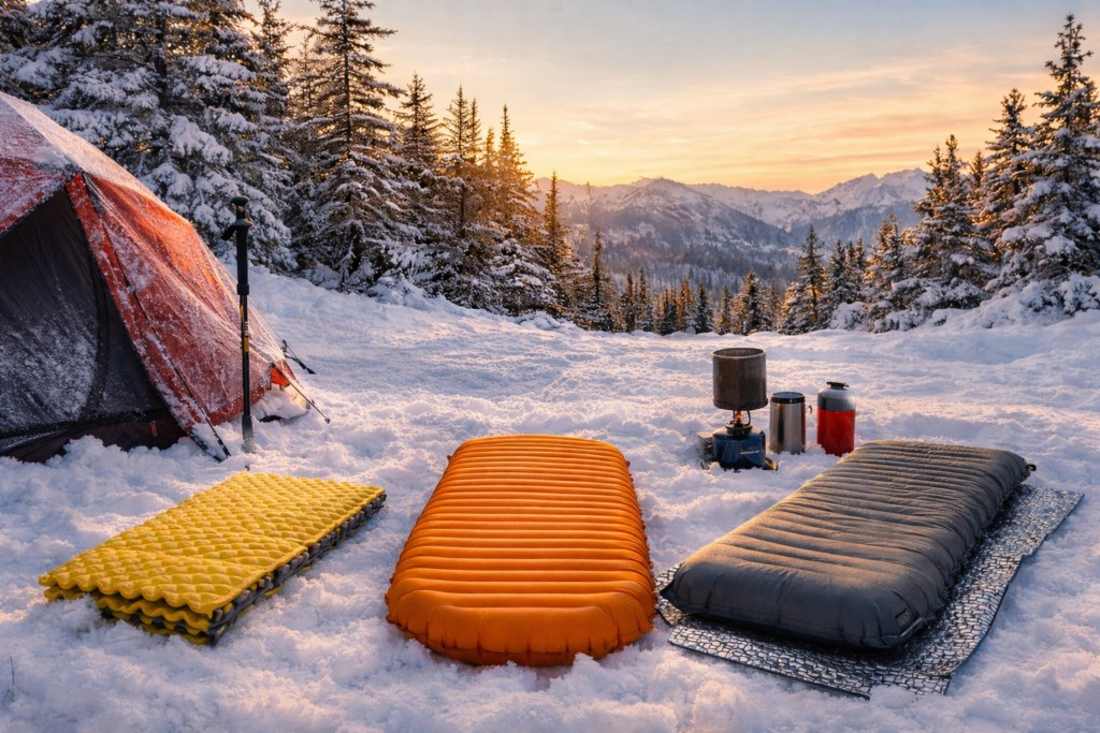
Best Insulated Sleeping Pads for Winter Camping
Cold weather camping demands more from your gear than almost any other season. While many campers focus on sleeping bags when temperatures drop, experienced winter campers know that what you sleep on matters just as much as what you sleep in.
An insulated sleeping pad isn’t just about comfort. In winter conditions, it’s a critical barrier between your body and frozen ground that actively pulls heat away from you throughout the night. Even the warmest sleeping bag will struggle if it’s compressed against a cold surface with little insulation underneath.
This guide breaks down the best insulated sleeping pads for winter camping, explains what actually matters when choosing one, and helps you find the right option for your style of camping — whether that’s winter backpacking, snow camping, or cold-weather car camping.
Why Insulated Sleeping Pads Matter in Winter
When you lie down to sleep, your body loses heat in three main ways: conduction, convection, and radiation. In winter, conduction becomes the biggest issue. Cold ground rapidly draws warmth away from your body, especially when snow or frozen soil is involved.
A good winter sleeping pad:
- Creates a thermal barrier between you and the ground
- Prevents heat loss through compression
- Helps your sleeping bag perform as intended
- Reduces overnight fatigue caused by poor sleep
Many campers discover this the hard way after spending a long, restless night feeling cold despite using a high-rated sleeping bag. In most cases, the pad — not the bag — is the weak link.
Understanding R-Value (Without Overcomplicating It)
R-value is the industry standard for measuring how well a sleeping pad resists heat loss. Higher numbers mean better insulation.
As a general guide:
- R-value 1–2: Summer use only
- R-value 3–4: Mild spring/autumn conditions
- R-value 5+: Cold weather and winter camping
- R-value 6–8: Snow camping and deep winter conditions
For most winter campers, an R-value of at least 5 is the minimum starting point. If you regularly camp on snow or frozen ground, higher values provide noticeably better comfort and warmth.
Types of Insulated Sleeping Pads for Cold Weather
Not all insulated pads are built the same. Each type has strengths and trade-offs depending on how you camp.
Inflatable Insulated Sleeping Pads
Inflatable pads dominate winter camping because they combine insulation with comfort and packability. They use internal baffles, reflective layers, or synthetic insulation to trap warmth.
Pros:
- Excellent warmth-to-weight ratio
- Pack down small
- Adjustable firmness
- Comfortable for side sleepers
Cons:
- Can be punctured if not handled carefully
- Slightly more setup time
These are often the best choice for winter backpacking and longer trips where weight matters.
Closed-Cell Foam Pads
Closed-cell foam pads are simple, durable, and reliable. While they’re less comfortable than inflatable options, they perform consistently in cold conditions.
Pros:
- Extremely durable
- No risk of punctures
- Lightweight
- Affordable
Cons:
- Bulky
- Less cushioning
- Lower insulation per thickness
Many winter campers use foam pads as a base layer, combined with an inflatable pad on top for maximum warmth and redundancy.
Self-Inflating Pads
Self-inflating pads sit between foam and inflatable designs. They contain open-cell foam that expands when the valve is opened.
Pros:
- Good insulation
- Comfortable
- More durable than pure inflatables
Cons:
- Bulkier than inflatable pads
- Heavier
- Slower to pack
They’re often well-suited for car camping or shorter winter trips where weight isn’t critical.
Best Insulated Sleeping Pads for Winter Camping
Below are some of the best insulated sleeping pads that perform well in cold and winter conditions. Each option suits a slightly different type of camper.
Therm-a-Rest NeoAir XTherm
The NeoAir XTherm is widely regarded as one of the best winter sleeping pads available. It delivers exceptional warmth with a very high R-value while remaining surprisingly lightweight.
Its internal reflective layers reduce heat loss without relying on bulky insulation, making it a favourite among winter backpackers who need warmth without extra weight.
Best for:
- Winter backpacking
- Snow camping
- Cold alpine environments
Why it works well:
- Very high R-value
- Packs down small
- Excellent warmth-to-weight ratio
Exped DownMat XP
The Exped DownMat XP uses real down insulation inside the pad, offering outstanding warmth and comfort in freezing conditions. It’s thicker than many inflatable pads, which helps side sleepers stay comfortable on hard ground.
This pad is heavier than minimalist options, but for serious winter conditions, the trade-off is often worth it.
Best for:
- Extreme cold
- Basecamp setups
- Campers prioritising warmth and comfort
Why it works well:
- Down insulation provides excellent thermal performance
- Thick and supportive
- Reliable in very cold temperatures
Sea to Summit Ether Light XT Extreme
This pad balances comfort and insulation by using synthetic insulation and a thick air-sprung cell design. It’s particularly comfortable for restless sleepers and those who struggle with pressure points.
While slightly heavier than ultralight pads, it performs well in cold conditions without feeling overly bulky.
Best for:
- Side sleepers
- Cold weather camping
- Comfort-focused campers
Why it works well:
- Thick construction
- Good insulation
- Comfortable across different sleeping positions
Therm-a-Rest Z Lite Sol (Foam Option)
While not warm enough on its own for deep winter, the Z Lite Sol is often used in combination with an inflatable pad. The reflective surface adds extra insulation, and the foam layer protects inflatable pads from cold ground and punctures.
Best for:
- Layering systems
- Budget winter setups
- Backup insulation
Why it works well:
- Lightweight
- Durable
- Adds insulation when stacked
Layering Sleeping Pads for Winter
Many experienced winter campers use two pads instead of one. Layering a foam pad under an inflatable pad increases warmth, protects your inflatable, and provides redundancy if something fails.
A common setup:
- Closed-cell foam pad on the ground
- Insulated inflatable pad on top
This combination can easily push total R-value well beyond 6–7, which is ideal for snow camping.
Comfort Matters More Than You Think
Cold amplifies discomfort. If your hips or shoulders press into the ground, heat loss increases at those contact points. A pad that’s warm but uncomfortable can still lead to poor sleep.
Things to consider:
- Thickness (especially for side sleepers)
- Pad width
- Stability on uneven ground
- Noise when moving
Better sleep equals better energy, safer decision-making, and a more enjoyable trip overall.
Weight vs Warmth: Finding the Balance
Ultralight winter pads are impressive, but they often cost more. Heavier pads can be warmer and more comfortable but aren’t ideal for long carries.
Ask yourself:
- How far are you hiking?
- How cold will it realistically be?
- Is comfort or weight the priority?
There’s no single “best” pad — only the best one for how you camp.
Cold Weather Tips to Improve Sleeping Pad Performance
Even the best sleeping pad works better when paired with smart habits:
- Clear snow and level the ground before setting up
- Avoid placing pads directly on ice when possible
- Inflate pads fully in cold conditions
- Keep pads inside your tent overnight
- Use a groundsheet or footprint for extra insulation
Small adjustments can noticeably improve warmth.
How Ground Conditions Affect Heat Loss in Winter
One detail that often gets overlooked in winter camping advice is how dramatically different ground types affect heat loss. Snow, frozen soil, rock, and ice all behave differently when it comes to pulling warmth away from your body.
- Snow can actually insulate slightly if it’s deep and compacted, but only when there’s a proper barrier between you and it.
- Frozen soil conducts heat extremely efficiently, especially when moisture is present.
- Rock and alpine ground stay cold long after sunset and drain warmth steadily throughout the night.
- Ice offers almost no forgiveness and requires serious insulation underneath.
This is why sleeping pads that feel “fine” in autumn can suddenly feel useless in winter. As ground temperatures drop below freezing, heat loss accelerates, and weaknesses in your sleep system become obvious very quickly.
A winter-rated sleeping pad slows this process enough that your body can maintain warmth without burning excess calories overnight.
Why Sleeping Bag Ratings Depend on Your Sleeping Pad
Sleeping bag temperature ratings are often misunderstood. Most bags are tested assuming the sleeper is using an appropriately insulated sleeping pad.
If your pad doesn’t provide enough insulation:
- Heat escapes downward
- The bag’s insulation gets compressed
- The temperature rating becomes meaningless
This is why campers sometimes blame their sleeping bag when the real problem is underneath them.
In winter conditions, a sleeping bag and sleeping pad work as one system. Improving either component helps, but upgrading the pad usually delivers the biggest improvement for the least effort.
Insulation Materials Explained (Without Marketing Hype)
Manufacturers use several insulation strategies inside winter sleeping pads. Understanding the differences helps you choose based on performance rather than branding.
Reflective Layers
These reflect radiant body heat back toward you. They’re lightweight and effective but rely on proper internal design to avoid cold spots.
Synthetic Insulation
Synthetic fibres trap warm air and perform consistently even in damp conditions. They’re slightly heavier but more forgiving in real-world use.
Down Insulation
Down provides excellent warmth for its weight but requires good moisture management. High-quality down pads are extremely warm but usually cost more.
Each approach works — the key is matching insulation type to your environment and camping habits.
Choosing the Right Pad Shape and Size for Winter
Winter campers often underestimate the importance of pad shape and width. Cold conditions magnify pressure points and exposed areas.
Width Matters
A pad that’s too narrow allows arms, hips, or shoulders to press against cold ground. In winter, even brief contact can cause noticeable heat loss.
Many winter campers size up to a wide or rectangular pad, even if they normally use narrower designs.
Length Considerations
Short pads save weight, but exposed legs or feet require additional insulation. In winter, full-length pads reduce complexity and heat loss.
Sleeping Position and Heat Retention
How you sleep affects which pad works best for you.
- Back sleepers generally need less thickness but benefit from consistent insulation
- Side sleepers need thicker pads to prevent hips and shoulders compressing insulation
- Restless sleepers benefit from wider pads with stable baffle designs
In winter, discomfort isn’t just annoying — it leads to movement, broken sleep, and increased heat loss. Comfort becomes a thermal issue, not just a luxury.
Noise and Movement in Cold Conditions
Some insulated pads make more noise due to internal reflective layers. While this might seem minor, it can become noticeable during long winter nights when movement is frequent.
If you’re a light sleeper or camp in very quiet environments, pad noise can affect sleep quality more than expected. This is one of those details that rarely shows up in specs but matters in real use.
Durability and Long-Term Winter Use
Cold temperatures make materials stiffer and less forgiving. Pads used in winter should handle:
- Repeated inflation and deflation in cold air
- Increased pressure from heavy winter clothing
- Abrasion from frozen ground and ice
This is one reason many winter campers avoid ultralight designs for extreme cold trips. A slightly heavier pad often lasts longer and performs more consistently across seasons.
Redundancy: Planning for Failure in Winter
In summer, a failed sleeping pad is uncomfortable. In winter, it can be dangerous.
This is why many winter campers:
- Carry a foam backup pad
- Use layered pad systems
- Choose pads with proven reliability
Redundancy doesn’t mean overpacking — it means avoiding single points of failure when conditions are unforgiving.
Using Sleeping Pads Inside Tents vs Outside
Where you place your sleeping pad also matters.
Inside a tent:
- Less exposure to wind
- Slight temperature buffering
- Better protection from abrasion
Outside or under minimal shelters:
- Increased heat loss
- Greater reliance on pad insulation
- More benefit from layered systems
Winter campers using tarps or minimalist shelters should prioritise higher R-values than those using four-season tents.
Managing Moisture Around Sleeping Pads
Moisture management becomes critical in winter. Condensation, snow melt, and breath moisture can all affect insulation performance.
Helpful habits include:
- Letting pads dry during the day when possible
- Avoiding direct contact with wet ground
- Storing pads uncompressed during breaks
Synthetic insulation handles moisture better than down, but even reflective pads benefit from staying dry.
Weight Trade-Offs for Winter Backpacking
Winter backpacking already involves heavier gear. Choosing where to accept weight increases is part of smart planning.
Many experienced winter hikers:
- Accept extra pad weight
- Reduce weight elsewhere
- Prioritise sleep quality over minimal pack weight
Good sleep improves decision-making, reduces fatigue, and lowers risk — especially in cold, demanding environments.
When to Use Two Pads vs One High-R Pad
Some campers prefer one high-R inflatable pad. Others prefer two moderate pads layered together.
Two-pad systems offer:
- Flexibility across seasons
- Backup insulation
- Better durability
Single-pad systems offer:
- Simpler setup
- Less bulk
- Faster camp routines
Both approaches work — the best choice depends on how often you camp in winter and how remote your trips are.
Common Winter Sleeping Pad Mistakes
Even experienced campers sometimes make these mistakes:
- Using summer pads “just for one cold trip”
- Underestimating ground cold
- Choosing pads based on weight alone
- Ignoring width and comfort
Learning from these early avoids uncomfortable or unsafe nights later.
Final Thoughts
Winter camping magnifies every weakness in your gear. An insulated sleeping pad isn’t just a comfort upgrade — it’s a foundational part of staying warm, rested, and safe.
Choosing the right pad means:
- Understanding heat loss
- Matching insulation to conditions
- Balancing weight and comfort
- Planning for real-world use, not ideal scenarios
When your sleeping pad works properly, winter camping becomes quieter, calmer, and far more enjoyable.
For more winter-specific camping advice and gear breakdowns, explore the cold-weather guides on Campingzilla.
https://campingzilla.com/best-insulated-sleeping-pads-for-winter/
Practical Camping Advice That Makes Outdoor Trips Easier – Camping Zilla

