
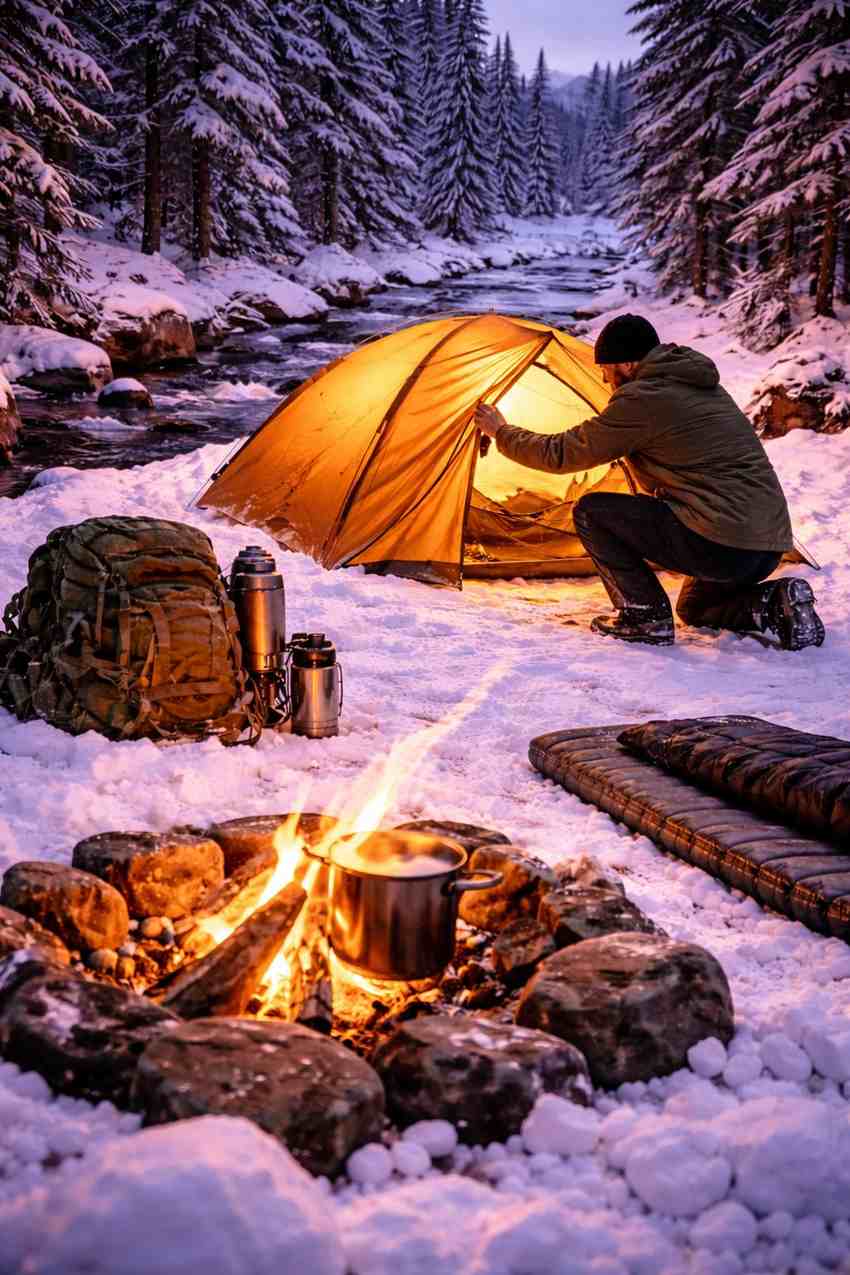
How to Build a Reliable Camping Sleep System for Cold Nights
Camping in cold conditions is often made harder by one overlooked problem: people focus on individual pieces of gear instead of building a sleep system that works together. A sleeping bag alone is not enough. A warm jacket does not fix poor ground insulation. A good tent cannot fully compensate for the wrong setup underneath you.
When temperatures drop, sleep quality becomes one of the most important parts of the entire trip. Poor sleep leads to fatigue, slower decisions, and a more uncomfortable experience overall. A reliable camping sleep system does not need to be expensive or complicated, but it does need to be built with purpose.
This guide explains how to create a sleep setup that actually works for cold nights, whether you are camping in late autumn, early spring, or full winter conditions.
Why Your Sleep System Matters More Than Most Campers Realise
A lot of campers think warmth at night is mostly about the sleeping bag. In reality, cold nights are usually the result of a system failure rather than one bad item.
If you are cold while camping, the cause is usually one of the following:
- heat loss into the ground
- moisture trapped in clothing or bedding
- poor insulation layering
- not enough calories before bed
- exposure to wind or cold air inside the shelter
This is why experienced campers often talk about the whole sleep system, not just a sleeping bag.
A proper sleep system includes:
- ground insulation
- sleeping bag or quilt
- shelter setup
- clothing choices
- overnight warmth habits
When all of these parts work together, cold nights become much easier to manage.
Start With the Ground: This Is Where Most Heat Is Lost
One of the most common mistakes in cold-weather camping is underestimating how much warmth disappears into the ground. Frozen soil, compacted earth, and snow all pull heat away steadily throughout the night.
This is why insulated sleeping pads matter so much.
Many campers try to improve warmth by upgrading the sleeping bag first, but in real-world use, ground insulation often makes the bigger difference. If the cold is rising up from underneath you, your body has to work harder all night just to stay warm.
If you are building a sleep setup for cold nights, start here first.
If you want a breakdown of better cold-weather pad options, this guide compares winter-ready choices in more detail:
https://campingzilla.com/best-insulated-sleeping-pads-for-winter/
A good pad does more than add comfort. It helps preserve your body heat so the rest of your sleep system can actually do its job.
Your Sleeping Bag Should Match the Conditions, Not Just the Label
Sleeping bag temperature ratings are often misunderstood. Many bags are tested in controlled conditions and assume the user is already sleeping on adequate insulation.
That means even a “warm” sleeping bag can feel disappointing if the rest of your setup is weak.
When choosing a bag for cold nights, it helps to think practically:
- Will temperatures fall after midnight?
- Is there likely to be damp air or condensation?
- Are you camping near exposed ground or snow?
- Do you naturally sleep warm or cold?
A realistic bag choice almost always performs better than an optimistic one.
It is also worth remembering that comfort matters. If you are cold enough to wake up repeatedly or spend the night curled tightly to conserve warmth, your recovery and next-day energy will suffer.
Your Shelter Changes the Whole Night-Time Experience
A tent does not create warmth on its own, but it absolutely changes how warmth is preserved.
Shelter affects:
- wind exposure
- internal moisture
- how quickly heat escapes
- how protected your sleeping setup remains overnight
Even a basic but well-positioned tent can feel significantly warmer than a poor setup in an exposed location.
If possible, camp in a place with some natural wind protection. Trees, hedges, and terrain features can make a noticeable difference. Avoid pitching directly in exposed open areas when cold wind is likely overnight.
A reliable sleep system is not just what you sleep in. It is also what you sleep inside.
Dryness Matters More Than Most People Think
A technically “warm” setup can still feel cold if moisture is involved.
This is one of the biggest reasons campers have poor nights in colder weather. They arrive at camp slightly damp from walking, keep the same layers on, then crawl into bed already losing heat.
Moisture works against your entire system.
A simple rule that improves cold-weather sleep immediately is this:
Never go to bed in the layers you hiked in if they are even slightly damp.
Changing into dry layers before bed makes a bigger difference than many campers expect.
Dry socks, dry base layers, and dry insulation help preserve warmth far more effectively than trying to “fight through” dampness.
What You Wear to Sleep Can Help or Hurt
It is tempting to wear everything you own inside a sleeping bag when temperatures drop. Sometimes that helps. Sometimes it makes things worse.
The goal is not to wear the most clothing possible. The goal is to wear dry, breathable, insulating layers that do not compress your bag’s insulation or restrict circulation.
For most cold nights, a better approach is:
- dry base layers
- warm socks
- a hat or hood if needed
- a light insulated layer only if necessary
If you are buried in tight clothing, your body may actually struggle to warm the sleep space efficiently.
The key is always system balance.
What You Eat Before Bed Actually Affects Warmth
This gets ignored far too often.
When camping in cold conditions, your body needs energy to stay warm. If you go to sleep under-fuelled, you are more likely to feel cold in the early hours of the morning.
This does not mean eating a huge meal right before bed, but it does mean giving your body enough fuel to keep heat production going overnight.
Good pre-bed options include:
- warm carbs
- calorie-dense snacks
- a hot drink
- something easy to digest but substantial
Cold-weather sleep is not just about gear. It is also about giving your body the resources to do its job.
Light and Camp Routine Also Affect Sleep Quality
A reliable sleep system is not only about what happens inside the tent. It is also about how easy it is to manage camp before bed.
If your campsite is chaotic, your gear is hard to organise, and you are fumbling in the dark trying to sort things out, your evening routine becomes colder and less efficient.
This is where practical camp lighting helps more than people realise.
A good headlamp makes setup, cooking, and final tent prep much easier after dark.
If you need a dependable hands-free lighting option, this guide breaks down rechargeable choices:
https://campingzilla.com/best-rechargeable-headlamps-for-night-hikes/
Area lighting can also make camp feel more organised and less stressful, especially if you are sorting gear or preparing food in fading light.
For softer ambient lighting around camp, you can also compare options here:
https://campingzilla.com/best-solar-powered-camping-lanterns/
Better camp routine usually leads to better sleep.
Fire, Warmth, and the Psychological Side of Cold Nights
Not every cold-weather camp needs a fire, but there is no doubt that fire changes how camp feels. Warmth, morale, routine, and confidence all improve when a fire is available and conditions allow for it.
However, relying on fire as your only cold-weather backup is not a strong plan.
A better approach is to build your sleep system so it works independently, and then treat fire as a useful extra rather than a rescue strategy.
Still, for emergencies or difficult conditions, a dependable fire-starting backup matters.
If you want to strengthen your cold-weather backup system, this guide covers emergency-focused fire-starter options:
https://campingzilla.com/best-firestarter-kits-for-emergencies/
Even if you never need them in a worst-case situation, redundancy is what turns stressful nights into manageable ones.
Why Simplicity Usually Wins
One of the biggest mistakes campers make is overcomplicating cold-weather setups.
They bring too many layers, too many “just in case” add-ons, too many mismatched pieces of gear, and no clear routine for how it all works together.
A reliable camping sleep system is usually simple.
It should be easy to explain:
- I am insulated from the ground
- I have a sleeping bag suited to the temperature
- My layers are dry
- My shelter is positioned well
- I have enough food and warmth support
- I can manage camp easily after dark
That is what reliability looks like.
A Better Way to Think About Warmth While Camping
A lot of people think warmth is about “having the best gear.”
In reality, warmth is more often about removing weak points.
If your setup has one major failure point, such as poor ground insulation or damp clothing, the rest of the gear has to work much harder.
But if your whole system is balanced, even a moderate setup can perform surprisingly well.
That is why experienced campers often sleep warmer with a more thoughtful setup than someone with more expensive gear and worse habits.
Final Thoughts
A reliable camping sleep system is one of the most valuable things you can build if you camp in cold weather. It improves comfort, supports recovery, and reduces the chances of a cold night ruining the whole trip.
The best setups are not always the most expensive. They are the ones built around the basics that matter most: insulation, dryness, shelter, routine, and consistency.
If you want to improve your setup, start with the parts that make the biggest difference first.
You can compare better cold-weather sleeping pads here:
https://campingzilla.com/best-insulated-sleeping-pads-for-winter/
You can improve your camp lighting here:
https://campingzilla.com/best-rechargeable-headlamps-for-night-hikes/
https://campingzilla.com/best-solar-powered-camping-lanterns/
And if you want a stronger emergency backup system, you can review firestarter options here:
https://campingzilla.com/best-firestarter-kits-for-emergencies/
When your sleep system works properly, cold nights stop feeling like something to “get through” and start feeling like part of the experience.

